Payment Method Variety and Rating Patterns in Live Dealer Casino Applications
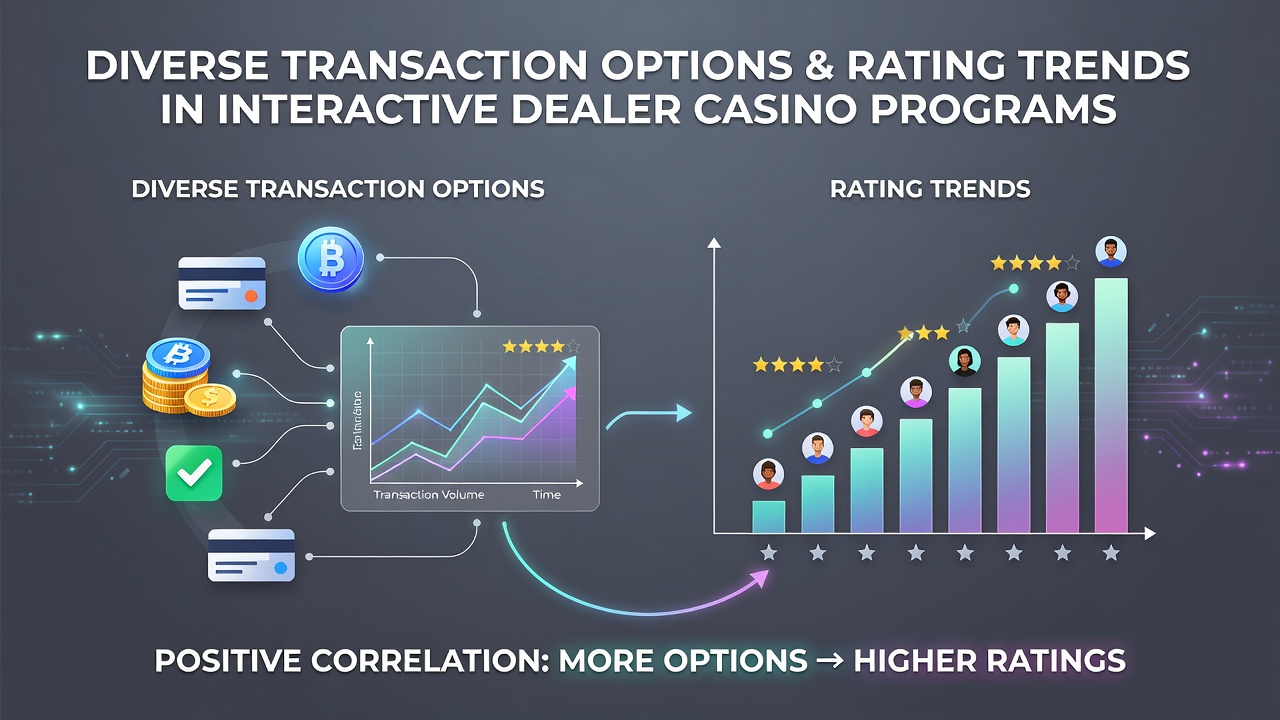
Interactive dealer casino programs rely on varied transaction methods to facilitate deposits and withdrawals, and analysts track how these options align with user rating patterns over time. Data from multiple markets shows applications supporting five or more payment types often maintain higher average scores on app stores compared to those limited to two or three methods, with the difference appearing in quarterly reviews collected through 2025 and into mid-2026.
Common Transaction Methods in Live Dealer Environments
Live dealer platforms integrate credit cards, e-wallets such as PayPal and Skrill, bank transfers, prepaid vouchers, and cryptocurrency options in many jurisdictions. Each method carries distinct processing speeds and fee structures that users evaluate when assigning ratings. Observers note that programs offering instant or same-day withdrawals through digital wallets frequently receive feedback citing convenience, whereas those restricted to slower bank transfers see comments focused on delays.
Payment diversity also includes regional preferences, with North American users often favoring credit cards and certain European markets showing stronger adoption of local bank solutions. Researchers examining app store metadata find that broader method availability correlates with fewer one-star reviews related to access issues, particularly in regions where regulatory changes altered available options during early 2026.
Rating Trends Observed Across Platforms
Application stores publish aggregated scores that fluctuate with updates to transaction features. Studies tracking hundreds of live dealer programs indicate a measurable uptick in ratings when new payment integrations launch, especially if those additions reduce average withdrawal times below 24 hours. The pattern holds across both Android and iOS listings, though Android titles show slightly larger score gains following expansions in supported cryptocurrencies.
Figures from industry monitoring services reveal that programs maintaining at least six distinct transaction pathways averaged 4.4 stars or higher in user submissions collected between January and June 2026. In contrast, titles limited to traditional card and bank methods hovered closer to 3.9 stars during the same window. These differences emerge consistently in data sets covering thousands of reviews, with payment-related keywords appearing more frequently in positive comments on higher-rated applications.

Correlation Factors Identified by Analysts
Statistical reviews connect payment variety directly to retention metrics that influence long-term ratings. When users encounter fewer barriers during deposits or cashouts, repeat engagement rises, and satisfied participants tend to leave additional reviews. One analysis of North American platforms conducted by the Nevada Gaming Control Board highlighted how programs adding e-wallet support experienced a 12 percent reduction in negative feedback tied to financial friction.
Similar patterns surface in other territories. Reports from the Australian Communications and Media Authority documented comparable rating improvements after several operators expanded to include local bank transfer options alongside existing digital wallets. The data suggests that alignment between available methods and user expectations in specific markets drives the observed correlation more than the sheer number of options alone.
Examples from Program Updates
Take one developer who introduced cryptocurrency deposits in Q2 2026 across its live dealer suite. User ratings on both major app stores climbed an average of 0.3 points within eight weeks, with reviewers specifically referencing faster processing and privacy features. Another case involved a mid-sized operator that consolidated its payment partners, reducing supported methods from seven to four; subsequent reviews showed increased mentions of limited choices, and aggregate scores declined steadily over the following quarter.
Those who've examined these shifts note that successful integrations often pair new transaction types with clear in-app guidance, which further supports positive rating momentum. Programs that fail to communicate changes effectively see muted benefits even when adding popular methods.
External Influences on the Relationship
Regulatory shifts and technological updates also shape how transaction options affect ratings. Platforms operating under frameworks from bodies such as the Malta Gaming Authority must meet specific payout timelines, and compliance often requires adding compatible payment rails. Research indicates that operators adapting quickly to these requirements sustain steadier rating performance compared to slower adapters.
Market competition plays a role too. As more applications advertise diverse payment menus, users compare options across titles and adjust their ratings accordingly. Data collected through June 2026 shows this competitive pressure amplifying the correlation, with top-rated programs consistently listing broader method selections than lower-scoring competitors.
Conclusion
Available records demonstrate a consistent link between the range of transaction methods and user rating outcomes in interactive dealer casino programs. Broader payment support tends to coincide with higher average scores, driven by reduced friction during financial interactions and alignment with regional preferences. Continued monitoring through regulatory reports and app store analytics will clarify how these patterns evolve alongside new payment technologies and policy developments in coming periods.